


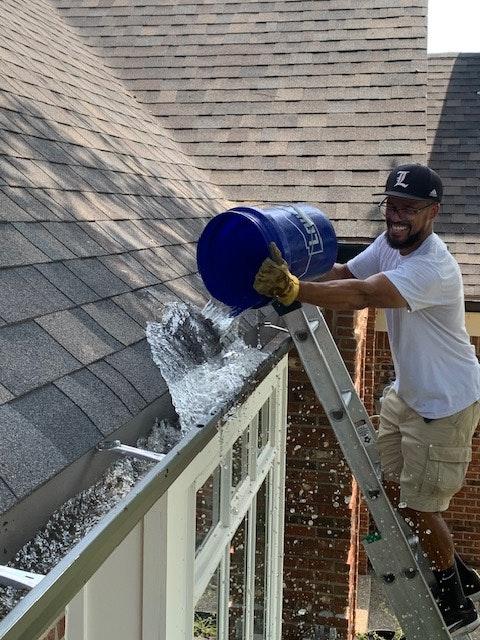
Gutters are essential for moving rainwater away from your roof, exterior walls, and foundation. In Kentucky, seasonal rainfall, falling leaves, wind, and storm debris can gradually reduce gutter performance.
1. Gutters Overflow During Rain
Overflowing water may indicate blockages, poor slope, or insufficient drainage capacity.
2. Gutters Are Sagging
Sagging sections can prevent water from flowing correctly and may place additional stress on mounting points.
3. Water Runs Behind the Gutters
Water behind the gutter can affect fascia boards and roof edges, particularly when the problem continues over time.
4. Downspouts Are Blocked
A blocked downspout prevents collected rainwater from leaving the gutter system and can cause overflow.
5. Rust, Cracks, or Separation
Visible cracks, rust, and separated joints can allow water to escape before it reaches the downspout.
6. Soil Erosion Near the Home
Water discharged too close to the foundation may create erosion and contribute to drainage concerns.
7. Granules or Debris in the Gutters
Excessive roofing granules or storm debris may indicate roof wear or recent weather-related damage and should be evaluated.
How Homesteads Roofing Helps
Homesteads Roofing serves homeowners throughout Kentucky with roof inspections, gutter-related evaluations, storm damage repairs, and roof replacement services. Professional attention can help identify drainage problems before they affect the home.