


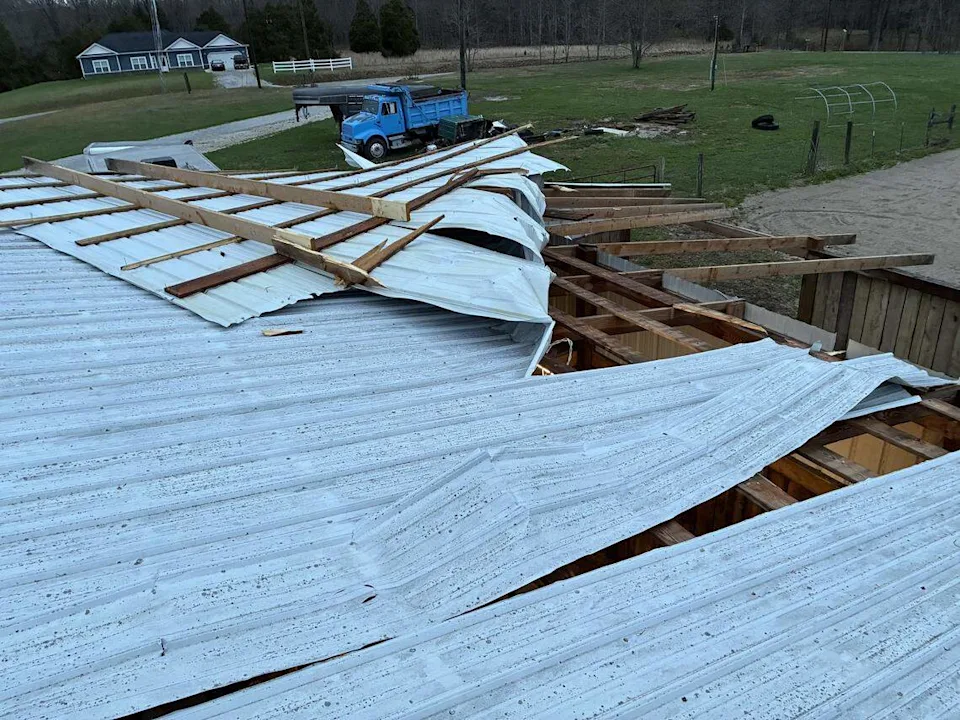
Powerful storms moving through Kentucky often bring strong wind gusts capable of breaking large tree limbs or even toppling entire trees. When this happens, the roof is usually the first part of the home to be damaged.
Even a relatively small branch can puncture shingles, damage flashing, or weaken the roof structure.
How Trees Damage Roofs
Storm-related tree damage commonly results in:
- cracked or broken shingles
- punctured roofing materials
- damaged roof decking
- bent gutters
- broken vents and flashing
Some damage is immediately visible, while other problems develop over time.
What You Should Do First
If a tree or large branch strikes your roof:
- Stay out of the damaged area.
- Check for electrical hazards.
- Document visible damage with photos.
- Contact a professional roofing contractor for an inspection.
Avoid climbing onto the roof yourself, especially after a storm.
Hidden Damage Is Common
Even if the tree only grazed the roof, the impact may have:
- loosened roofing materials
- weakened structural supports
- created small openings for water intrusion
Professional inspections help uncover these hidden problems.
Emergency Repairs Prevent Bigger Losses
Temporary roof protection can help prevent:
- additional water damage
- insulation problems
- mold growth
- interior ceiling damage
The sooner repairs begin, the lower the overall repair cost is likely to be.
How Homesteads Roofing Helps
Homesteads Roofing responds quickly to storm-related roof damage across Kentucky, helping homeowners safely restore their roofs after fallen trees and severe weather.
Need emergency roof repairs after a storm?